

Skills that answer from your real books
A playbook your assistant follows to answer one question from your real books. It pulls the numbers, shows the working, and says when something is missing.
npx skills add wellapp-ai/skillsSee what an answer looks like
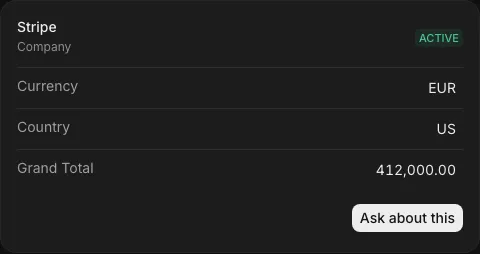
Every skill returns a real figure with the working behind it. These are the answers as they arrive in your assistant, computed from connected books rather than typed in.
Know how many months of cash you have at your current burn, with both sides of the division shown.


Get one morning message with the Attio tasks that are due today or overdue.
Know how much cash you hold right now, with the accounts counted and the ones left out both stated.
See today's priorities and agenda: your meetings and the work waiting on you, in one list.
Get a prioritized list of who to chase for payment, with their contact info and a message already drafted.
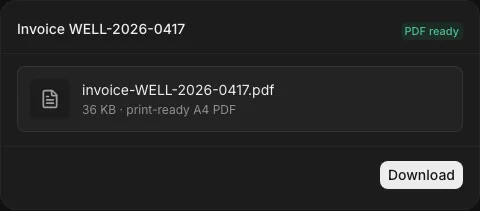
Turn a sentence into a draft invoice in Well, in your customer's design, with its PDF.
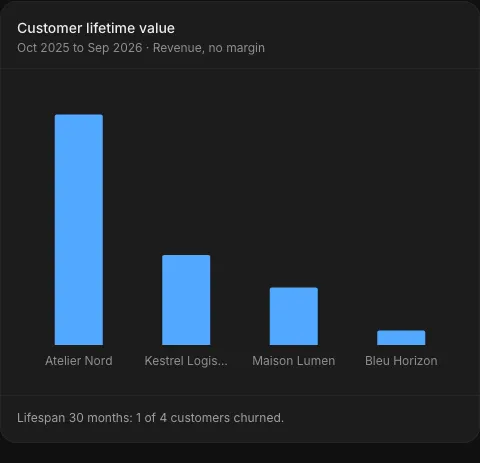
Find out what each customer is worth over its whole life, ranked from the most valuable down.
Pick how an invoice prints, from the designs and records you already have.
Drop one of your invoices and keep its look for every next invoice.
Find the bills with no paperwork attached, before an auditor does.
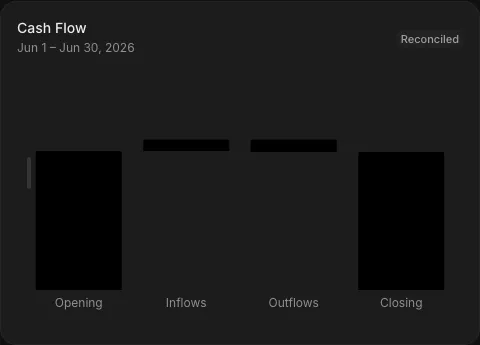
See how the month moved from opening cash to closing cash, with whatever does not reconcile named as its own step.
List newsletter senders from records and save one private sender choice.
See which suppliers owe you paperwork, before your accountant asks.
Summarize the member's observed mail week and respect private skipped senders.
Put a name on every settled expense that still has no invoice.
What Well holds about a customer's legal identity, and what is still blank.
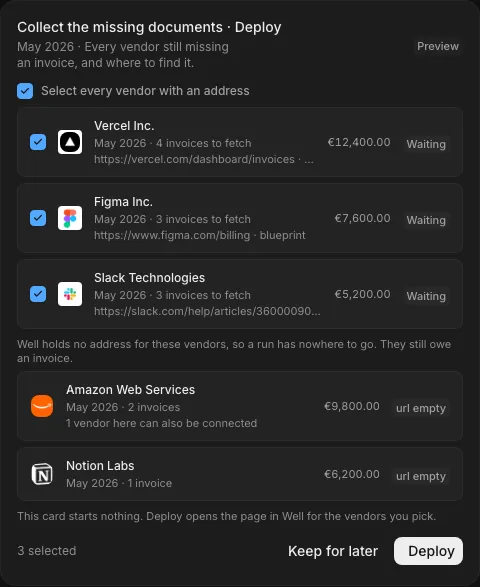
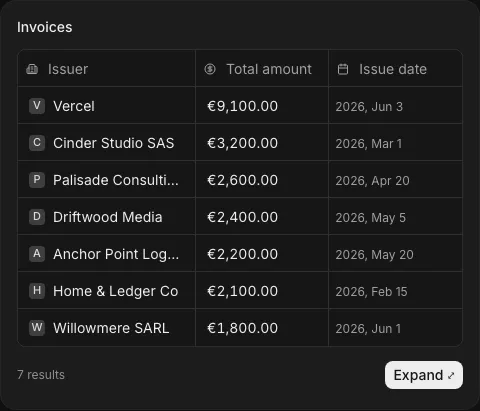
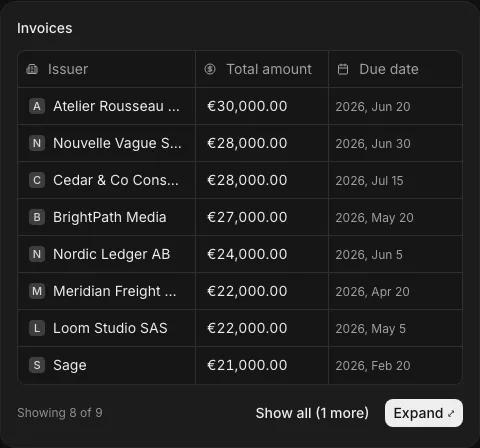
See who owes you money: the unpaid and overdue customer invoices, how late each is, and the total.
See exactly which agents would run, before any of them does.
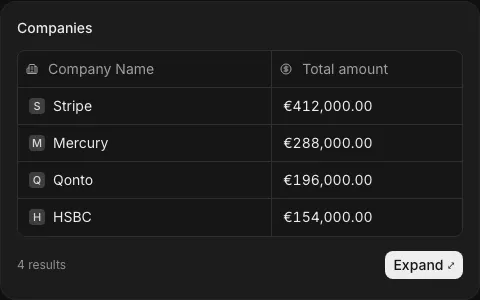
See which customers your revenue came from in a period, ranked, with the part you could not place named.
Drive the month-end close from open to sent to your accounting tool.
See what you owe and when, ordered by due date with a running total.
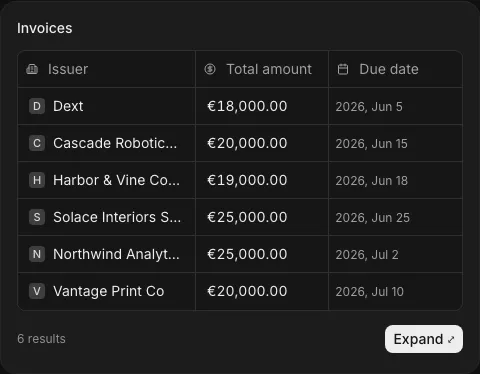
Re-run the posting pipeline for the rows that were ready but never posted.
See what you paid each supplier over a year, ranked, with the invoices that could not be placed counted beside the total.
Fix the month every following answer is measured over.
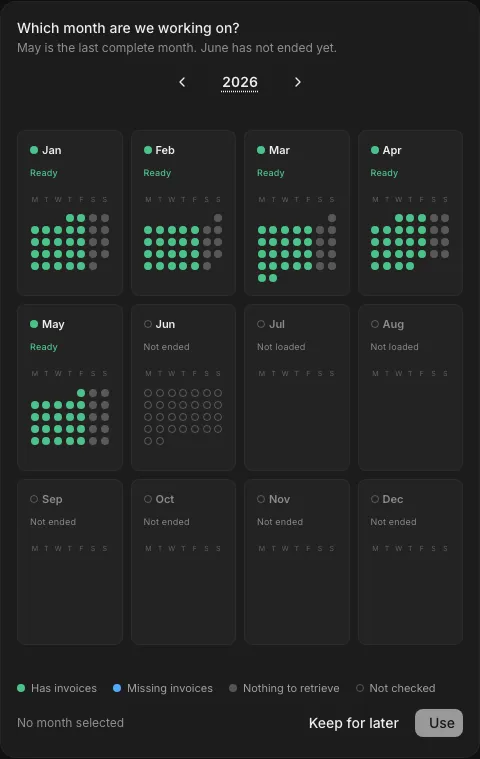
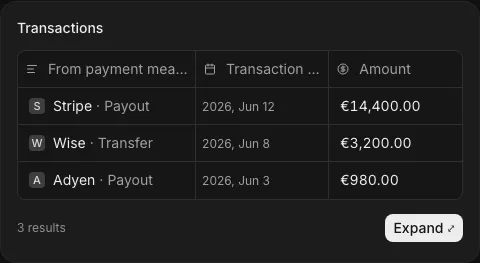
Find what payment settled an invoice, or catch every payment that never got one.
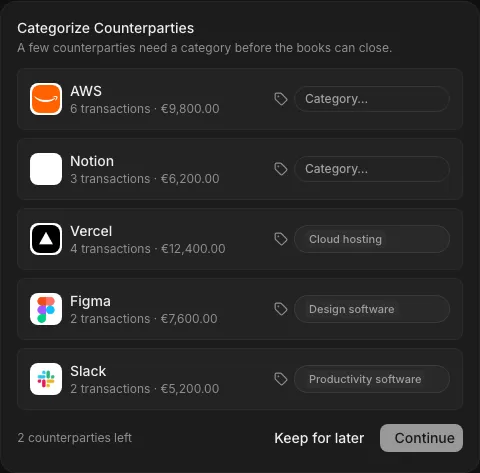
Close the category gaps behind your spend before you close a month.
See what each scheduled supplier costs a month and a year, how it moved, and where your workspaces can save.
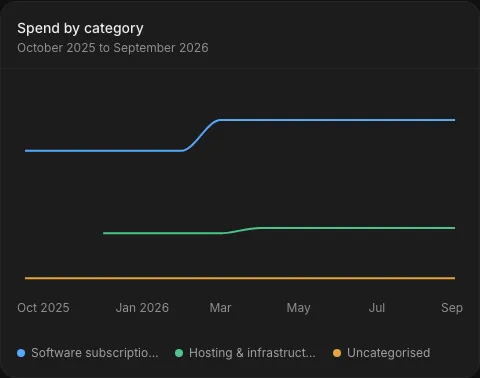
The measures you name, arranged on one board that stores the question rather than the answer.
See what you owe your suppliers, and how long each bill has been past due.
A board you saved, drawn with today's figures rather than the day it was built.
Cancel a subscription, ask for a better price or contest a double debit, with your bank's facts in the email.
Read the payslips for a month, or for each of several months, and state gross pay, tax withheld, social contributions and net pay per employee, in the currency each payslip was issued in.
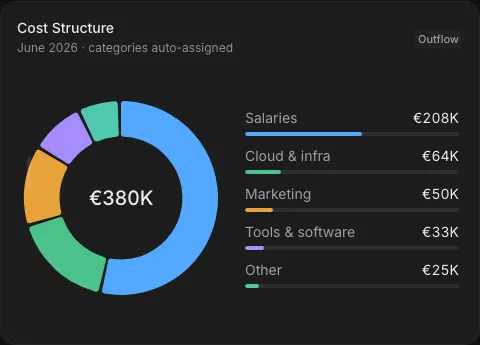
See where your company's money actually goes, no spreadsheets required.
Get page 1 of your 1120 back as a PDF with your own book figures already in the boxes, and a list of every box left for your preparer.
Lay your insurance offers next to your current contract, and get the letter that ends it.
Get one 1099-NEC per contractor back as a PDF with your own posted figures already in box 1, and the list of payees you cannot file for yet.
Know what you spend in an average month over a window you can see, with the months that carried no spend counted.

See what in a month has not reached the ledger, and which pile each item sits in.
Ask a contact for a document, a quote or an appointment, by email from your Gmail, after you confirm it.
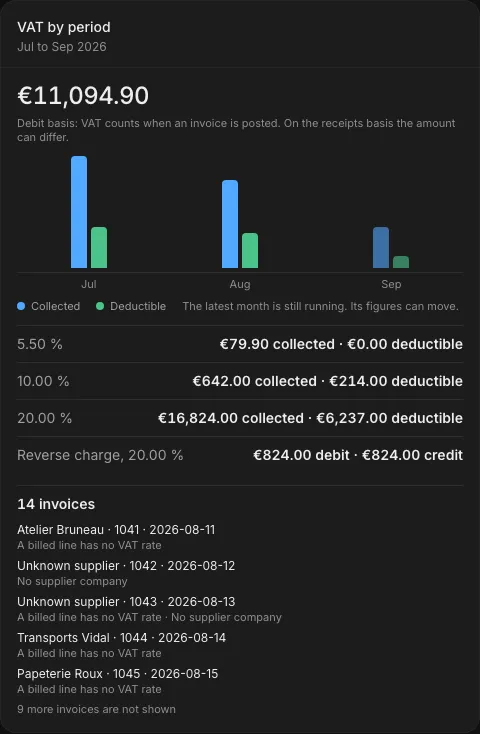
See the net VAT your posted ledger shows for a quarter and which invoices to fix first.
See how much of your cash and receivables sit outside your reporting currency.
Find the supplier refunds, VAT credits and expense notes still owed to you, with the evidence for each.
See who cancelled, which payments failed and what was refunded, read live from Stripe, Paddle or Lago.
Read your profit and loss or balance sheet from QuickBooks, Xero or Pennylane.
Know what you can count on earning each month, averaged over real months.

Read a month of payslips, or each of several months, and state, per person, gross pay plus the employee deductions and the employer charges the payslip printed, then list the payroll related bills paid from the bank that no payslip carries.
Claim a refund or a compensation with the evidence in hand, and know what to say when you call.
Read the founder's own payslips, state gross pay, tax withheld, contributions and net pay per period beside the legal form and country on the own company record, and name the self-pay paperwork that goes with them.
See what you spent on one thing this month, and how that compares to a usual month.
See what payroll and social obligations are coming, with the amount wherever a payslip carries one and whether the money already left the bank.
Check that your bank and your books match, and re-run what missed rows.
Read one person's payslip for a month, list the lines it printed beside the same contract's earlier payslips, and name every line whose amount changed, appeared or disappeared.
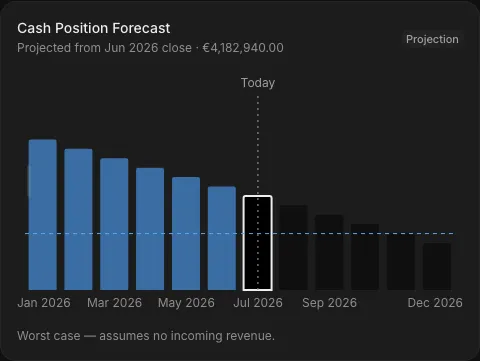
See the settled month-end cash series and where the line goes from the last complete month.
Read one month's payslips and the bank transactions that paid them, name every payslip with no matching debit and every payroll debit with no payslip, and, on your explicit yes, categorise and post those debits as net salaries, employer social charges or wage withholding.
The board numbers in one pass, each with its scope and its window stated.
Read one pay period's payslip lines for an hourly or part-time employee, state the hours, rate and amount on each line, name the overtime lines, and set the total against the hours the contract carries.
For one French payroll month, list the payslip lines that are neither salary, tax nor contribution, with the label and amount the payslip printed, set the receipt gaps Well already found beside them, and state the country rule each item has to be judged against.
For each supplier that looks like a freelancer, read the purchase invoices, the payment rail and any contract Well holds, and state the facts a requalification question turns on, next to the papers your country expects you to keep.
Read the purchase invoices for one calendar year, list the contractors and suppliers you paid with the total for each, name the ones with no tax identifier on file, and say which year-end statement each jurisdiction expects and when.
Read every payslip for one calendar year, total gross pay, tax withheld, social contributions and net pay per contract and per month, name each month that has no payslip or no posted journal entry, and hand the year to your accountant through the close package.
Read the final payslip for a leaver, state what it printed and what the contract says, and name the exit documents due and who sends each one.
Explore skills
Every playbook in the library, each answering one question from your real books.
85 skills
Cash
Spending
Getting paid
Invoices
Month-end
Errands
Setup
Add every skill to your assistant
npx skills add wellapp-ai/skillsAsk your first question today
Connect your bank and your invoicing. Five minutes later, ask how much runway you have. Free to start.